
Operational efficiency in practice: how automation and AI help companies grow with more control
The hidden cost of growth
As companies grow, small inefficiencies tend to pile up: repetitive tasks, parallel spreadsheets, forgotten follow-ups, and tools that don’t talk to each other. At first, it feels normal. Over time, it becomes a cost — in rework, errors, delays, and overloaded teams.
For cross-border operations (such as Brazil and Europe), friction often increases due to more steps, more stakeholders, language differences, and compliance requirements.

Real automation is not “turning everything into robots”
Automation doesn’t have to be complex. In practice, it means:
- standardizing routines to reduce dependency on specific individuals
- eliminating repetitive manual tasks (where errors happen most)
- integrating tools (CRM, forms, email, support, data)
- creating a clear flow: input → processing → output
AI adds an efficiency layer to classify, summarize, prioritize, and speed up communication, but the results usually come from well-designed processes + well-built integrations.
Where most companies find quick wins
A few areas tend to deliver fast ROI:
- Customer support & relationship management: faster, more consistent responses
- Sales follow-up: consistent touchpoints and fewer missed opportunities
- Marketing & content: a predictable flow (brief → production → review → publish)
- Back office: recurring reports, data entry, and data organization
A practical example: automation + applied AI with ROI in mind
To avoid long, expensive projects, an effective approach is to work in short cycles:
- Assessment (bottlenecks and the cost of the problem)
- Action plan (priorities by impact vs. effort)
- Implementation (automation + integrations + documentation)
- Optimization (continuous improvement based on metrics)
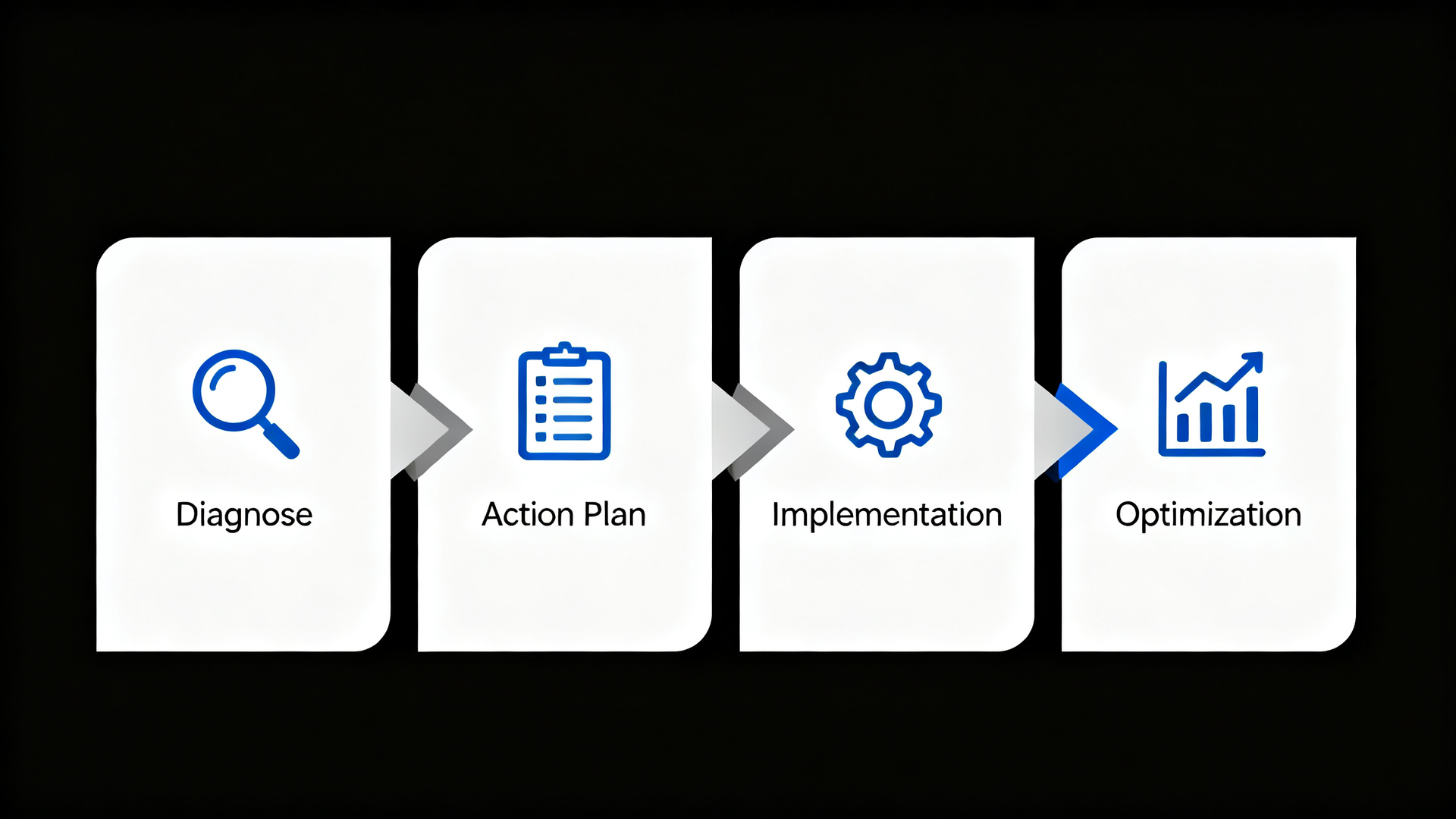
This is the model behind EB Technology Services: identifying bottlenecks, implementing automations, and organizing AI usage to deliver real efficiency — focused on ROI, from assessment to execution.
Learn more: https://ebtechnologyservices.com/
Efficiency must be measurable
Automation without measurement becomes a “nice-looking project” without proof. A good starting point is to track:
- time saved per week
- reduction in errors/rework
- response and completion times
- impact on conversion and productivity
Conclusion
Automation and applied AI don’t have to be a “big project.” When well-directed, they become an ongoing operational upgrade: less friction, more consistency, and more control — making room for what really drives growth.